
Skip to content
Free written quotesLocal technicians
Call now (239) 555-0182
Cape Coral, FL (239) 555-0182
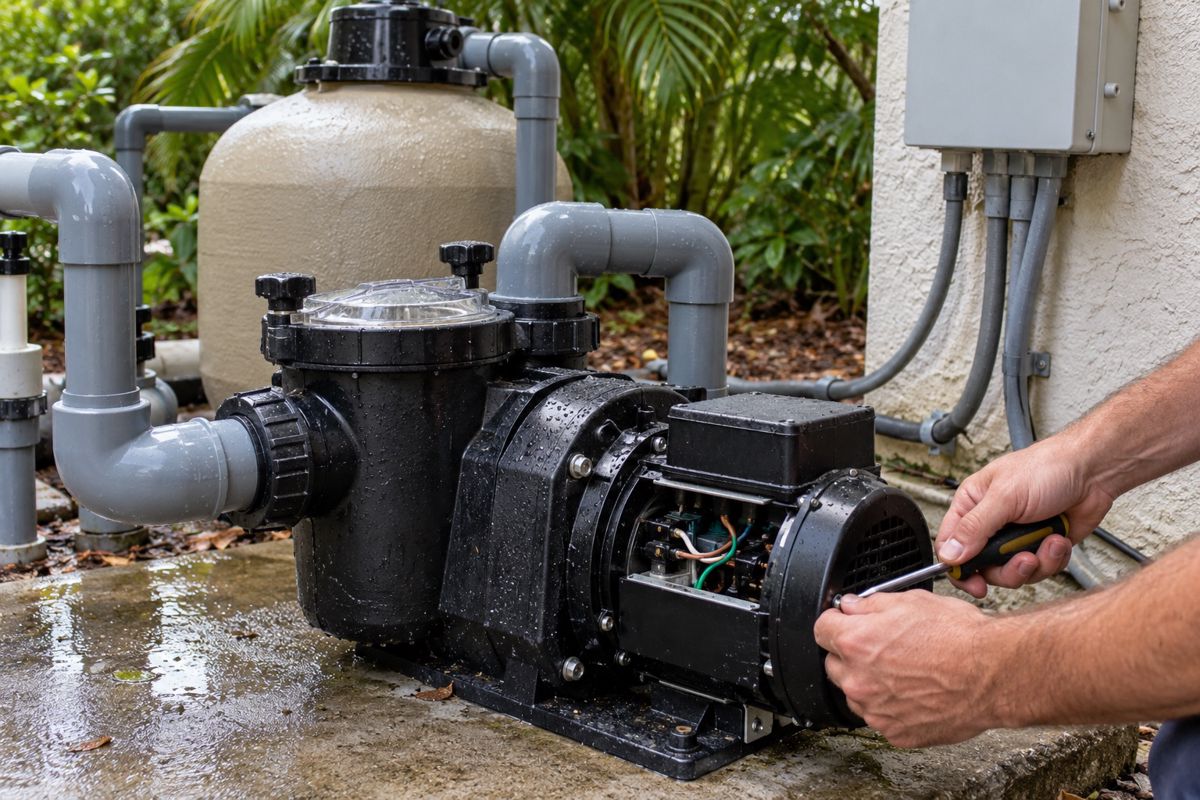
Technician's hands servicing a pool pump motor on an equipment pad

Pool pumps and motors

Pool pump repair in Cape Coral, FL

Noisy, leaking or dead pump? We find the fault, explain your options and quote in writing before any work starts.

  • Pump, motor and seal repairs
  • Variable speed replacement
  • Clear options: repair or replace

Step 1 of 3

What do you need?

What does pool pump repair involve?

The pump is the heart of the pool. It pulls water through the skimmer and drain, pushes it through the filter and heater and sends it back clean. When it stops, the water stops moving, and in Cape Coral heat the pool can go green within days.

Pool pump repair usually starts with working out which part has failed. Common faults include:

  • A worn shaft seal that leaks water from under the motor
  • Bearings that screech or grind
  • A failed capacitor, which makes the motor hum but not spin
  • A clogged impeller that cuts the flow
  • An air leak on the suction side that stops the pump priming
  • A motor that trips the breaker, often from age, moisture or electrical damage

We check the pump, the wiring and the plumbing around it, then tell you what is wrong in plain terms before we quote.

How do you know your pool pump is failing?

Pumps usually give warning before they quit. Watch and listen for these signs:

  • Loud grinding, squealing or rattling when the pump runs
  • Water dripping from the bottom of the motor or the seal area
  • Air bubbles in the pump lid or the return jets
  • Weak return flow, or a pump that loses prime
  • The motor humming but not turning
  • The motor getting very hot or switching off on its own
  • A higher power bill with no change in how long the pump runs

Turn the pump off at the breaker if you see water leaking near the motor or smell burning. Then give us a call. Running a failing pump can damage the filter and other equipment, and a leaking motor is an electrical risk.

Should you repair or replace the pump?

It depends on what failed and how old the pump is. A new seal, capacitor or set of bearings can add useful life to a pump that is otherwise sound. A motor with burnt windings, a cracked housing or repeated failures is usually better replaced.

Why variable speed is common now

Federal efficiency rules from 2021 mean that most replacement pumps sold today for residential pools are variable speed. They run slowly for longer, use much less power than an old single-speed pump and are quieter. They cost more at the start, and your power savings depend on how long you run the pump and on your setup.

We give you both options where it makes sense: the repair, and the replacement, each in writing. For more on how water moves through the system, see our page on pool filter cleaning.

We do not guess prices over the phone, and we quote in writing before any work starts. The things that decide the number are:

  • Repair or replacement. A seal or capacitor costs far less than a new pump.
  • Pump type and size. Horsepower, brand and single, two or variable speed all change the cost of the unit.
  • Plumbing changes. A new pump may not line up with the old pipework, and that adds fittings and labor.
  • Electrical work. A variable speed pump may need different wiring, a new breaker or a control that works with your automation.
  • Access. Tight equipment pads, fences and cramped spaces add time.
  • Permits. Some equipment work may need a permit. Ask any contractor whether one applies and who handles it.

How long does it take, and when should you call?

A straightforward repair such as a seal or capacitor is often done in one visit if the parts are on hand. A full pump replacement usually takes a few hours, longer if the plumbing or wiring has to change. Parts availability can vary, and we tell you if something has to be ordered.

On the day, we shut off the power, drain and isolate the pump, do the work, then restart it, check for leaks and set the run times. We explain what we changed.

Call as soon as you notice leaks, burning smells, a tripped breaker or a pump that will not start. If your pump runs but the water is still dull, the problem may be cleaning rather than equipment, so see our weekly pool service page, or go back to the home page and tell us what is going on.

  • Free written quotes
  • Local technicians
  • Reliable schedules
  • Clear pricing

Request pool pumps

Tell us what you need and we call you back.

No obligation.

Step 1 of 3

What do you need?

Questions about pool service in Cape Coral

Why does my pool pump keep losing prime?

The usual cause is air getting into the system. That can come from a low water level, a cracked or loose lid, a worn lid O-ring, a loose fitting on the suction side, or a full skimmer basket. A clogged impeller can also cause it. Check the water level and the basket first. If it keeps happening, we can test the suction side for air leaks.

Can lightning damage a pool pump?

Yes. Florida has a lot of lightning, and a strike nearby can send a surge through the wiring to the pump motor or the controls. The motor may stop working or become unreliable afterward. If the pump fails after a storm, switch it off at the breaker and call us. Your insurer may want to know, so keep notes and photos.

Is a variable speed pump worth it?

For many pools, yes. They are quieter and use far less electricity when run at lower speeds, and most replacement pumps sold now are variable speed anyway. The savings depend on your pump size, your run times and your power rates. We can talk through the numbers for your pool and give you a written quote for both the repair and a replacement.

How long do pool pumps usually last?

It varies by pump, use and conditions. Heat, moisture, electrical surges and running dry all shorten the life of a motor. A pump that runs for long hours through the Florida summer works harder than one in a cooler climate. If yours is old and starting to fail, it is worth asking about replacement before it stops completely.

Should I turn the pump off during a storm?

For a hurricane or tropical storm, shut the pump off at the breaker and follow local guidance for protecting your equipment. For a normal summer thunderstorm, many owners leave it running, but lightning is a risk. After any big storm, check for debris, damage and water in the equipment area before switching the pump back on.

How it works

  1. Tell us about the pool

    Size, type and what you need.

  2. Quote and schedule

    A written price and a service day.

  3. Clean, balanced water

    Cleaned, tested and logged every visit.

Ready when you are. Call now or request a quote online.

Takes about 30 seconds. Get my free pool quote